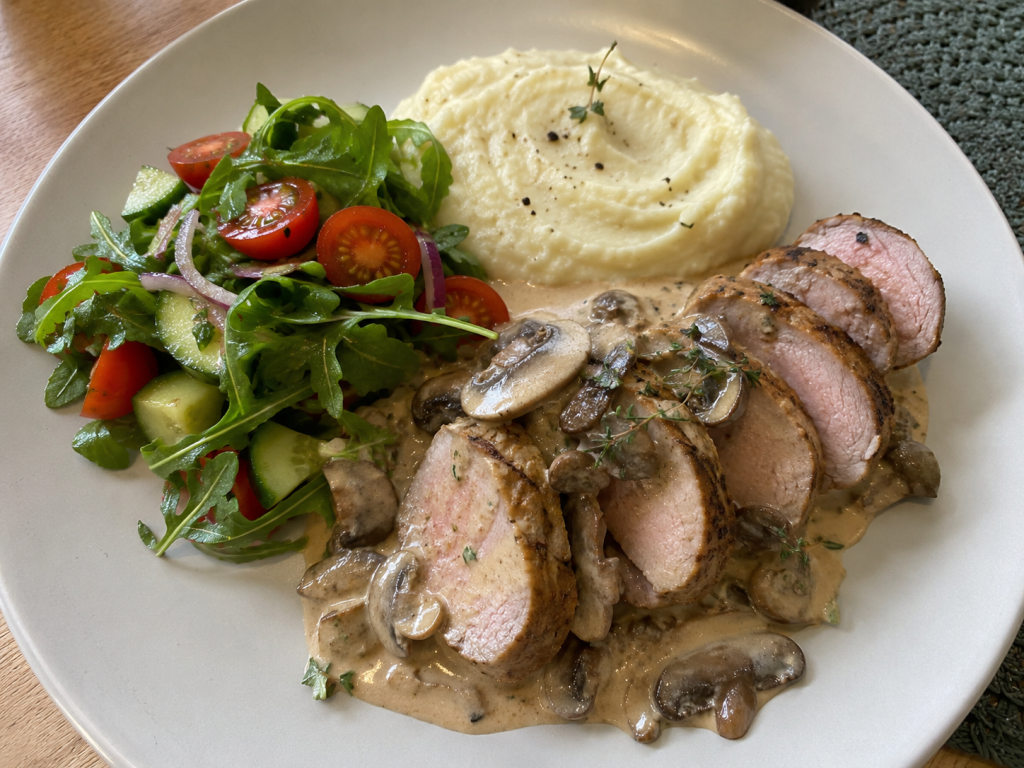
Pork Tenderloin with Wild Mushrooms, Creamy Cauliflower Mash & Fresh Garden Salad
A comforting, protein-packed dinner that’s naturally low in carbohydrates and full of flavor. Perfect for anyone looking for a balanced meal, including those living with Type 1 Diabetes.
Servings
- 2
Ingredients
For the Pork
● 350 g pork tenderloin
● 200 g wild mushrooms (chanterelles, porcini, oyster mushrooms or a mix)
● 2 cloves garlic, minced
● 1 tsp olive oil
● 1 tsp butter
● 100 ml cooking cream (15–18%)
● 1 tsp Dijon mustard
● 1 tsp fresh thyme
● Salt and black pepper
Creamy Cauliflower Mash
● 400 g cauliflower florets
● 15 g butter
● 30 g grated Parmesan
● Salt and pepper
Fresh Garden Salad
● Mixed lettuce
● Cherry tomatoes
● Cucumber
● Red onion
● Fresh parsley
Dressing
● 1 tbsp olive oil
● 1 tbsp lemon juice
● Salt and pepper
Instructions
1. Season the pork tenderloin generously with salt and pepper.
2. Heat the olive oil in a skillet and sear the pork for 3–4 minutes on each side until nicely browned. Transfer to a preheated oven at 180°C (350°F) and cook for another 10–12 minutes, or until the internal temperature reaches 63°C (145°F). Let it rest for 5 minutes before slicing.
3. In the same pan, melt the butter and sauté the mushrooms until golden. Add the garlic and thyme and cook for another minute.
4. Stir in the Dijon mustard and cooking cream. Simmer for 3–4 minutes until the sauce thickens slightly. Season to taste.
5. Meanwhile, boil the cauliflower until very tender, about 10 minutes. Drain well, then blend with the butter and Parmesan until smooth. Season with salt and pepper.
6. Toss the salad ingredients together and drizzle with the olive oil and lemon dressing.
7. Serve the sliced pork over the creamy mushroom sauce with the cauliflower mash and fresh salad on the side.
Nutrition (per serving)
● Calories: ~500 kcal
● Protein: 41 g
● Carbohydrates: 12 g
● Fiber: 5 g
● Fat: 31 g
This meal is rich in protein, healthy fats, and fiber while keeping carbohydrates low, which may help reduce large post-meal glucose spikes. Individual insulin needs vary, so always dose according to your personal insulin-to-carb ratio and monitor your glucose response.
 EmaTypeOne